Health Systems and Policy Evaluations
Evaluating how changes to health systems and public policy can improve outcomes for patients.
The HOPE Lab generates rigorous evidence to understand what shapes healthcare delivery and outcomes and to identify interventions, policies, and models of care that improve outcomes, with a focus on safety-net populations.
Evaluating how changes to health systems and public policy can improve outcomes for patients.
Advancing high-quality, high-value inpatient care in hospitals and health systems.
Studying the long-term health and prognosis of patients following hospitalization, with a focus on post-acute care and improving care transitions.
Understanding and addressing the social and economic conditions that shape patients' health and access to care.
Synthesizing, translating, and evaluating approaches and frameworks to improve evidence-based diagnosis and treatment.
Our team draws on a wide range of epidemiology & health services research methods to generate actionable evidence.

SVGIP is a collaboration with community partners, the Santa Clara County Office of Supportive Housing, and UCSF BHHI. The HOPE Lab, led by Dr. Nguyen, is conducting a mixed-methods RCT of guaranteed income to understand the effects of guaranteed income payments on housing stability, health, and well-being. It is the only trial in the US focused solely on family homelessness. 300 families were enrolled beginning in December 2022, about half of whom were randomized to receive payments equivalent to $1,000 a month for 2 years.

Road traffic injuries are a leading cause of death and disability. With support from Waymo LLC, the AVERT Study brings a multidisciplinary collaboration of UCSF study investigators led by Anil Makam and the HOPE Lab, to leverage San Francisco's unique single-trauma-center system to rigorously evaluate whether adoption of autonomous vehicles is associated with reduction in motor vehicle-related trauma care, generating evidence to inform transportation safety and public health policy.

Long-term acute care hospitals (LTACHs) provide inpatient post-acute care for weeks to months. With funding from NIA/NIH, The Donaghue Foundation, the National Association of Long Term Hospitals (NALTH), and a UCSF OAIC Pepper Center award, Dr. Makam's RAFT studies have led to field-defining research on the outcomes of hospitalized adults transferred to LTACHs. Active studies include prognosis for prolonged mechanical ventilation and undertanding the recovery and mortality risk of pressure ulcers.
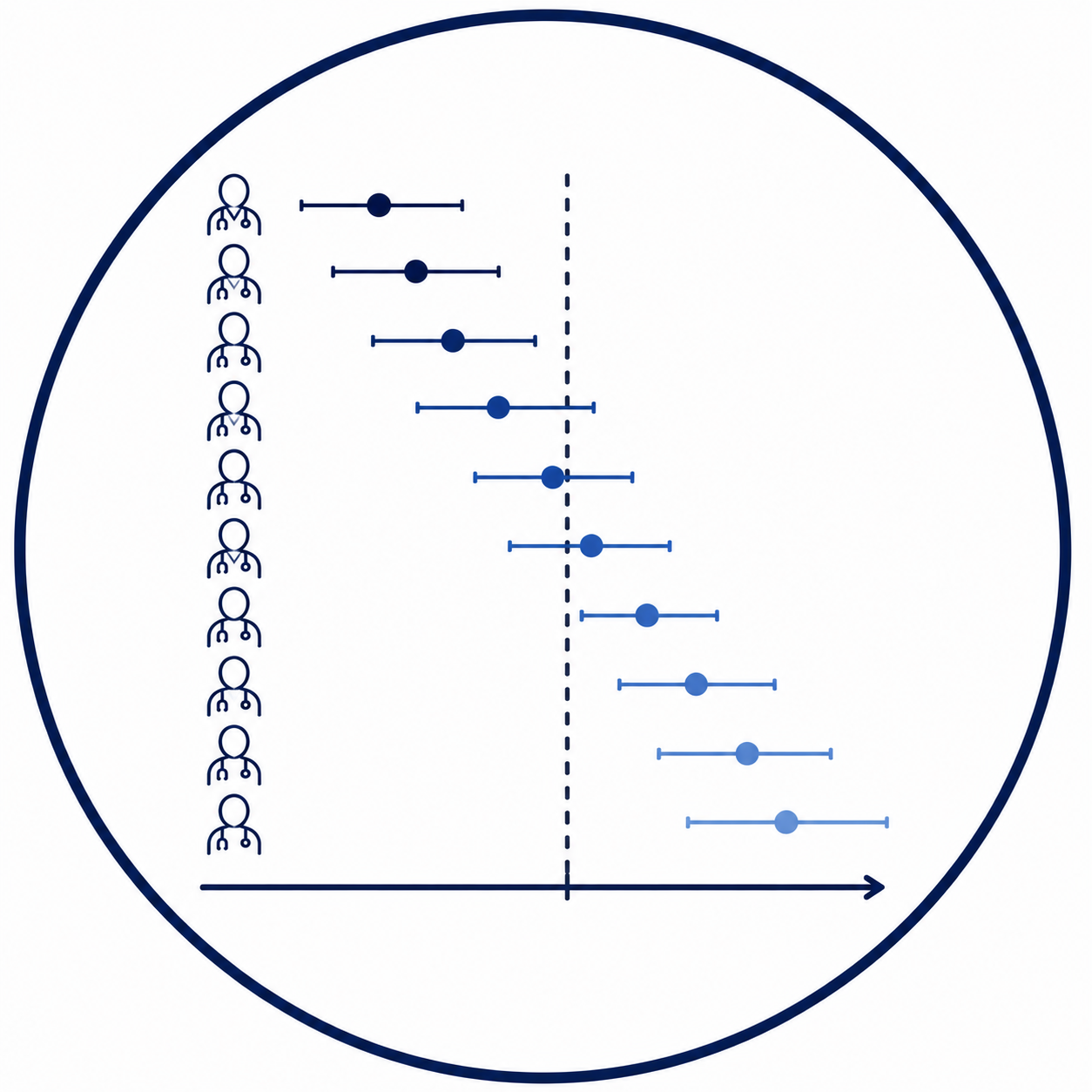
Spending on hospital care is a third of total US healthcare expenditures. This project leverages the quasi-randomization of patient assignment to assess hospital medicine physician variation in performance. With support from the DHM INSPIRE Incubator and funding by an AHRQ-funded UCSF E-STAR Scholar Award, Dr. Gallo is studying variation in discharge rates as an opportunity to support safer & more efficient care transitions.

GLP1s & SGLT2is are the only diabetes medications that reduce cardiovascular disease and death, but because of costs, their availability can be restricted for Medicaid enrollees via formulary restrictions. Funded by a UCSF RAP award & Action Research Center pilot, we found that many have restricted access, with substantial state variation. We are now studying the effect formulary coverage has on use of these medications and translating our findings into actionable, evidence-based recommendations for Medicaid formulary committees.
Our research has been supported by federal agencies, foundations & non-profits, institutional and professional organizations, community partners, and industry sponsors that share our commitment.
Federal grants and agency support for clinical, epidemiologic, and implementation research.




Philanthropic support that helps advance research, dissemination, and impact.



Institutional and professional partners that support training, scholarship, and dissemination.




Community-based and public-sector partners working with the lab on research and implementation.


Industry partners supporting collaborative research, implementation, and evidence generation.